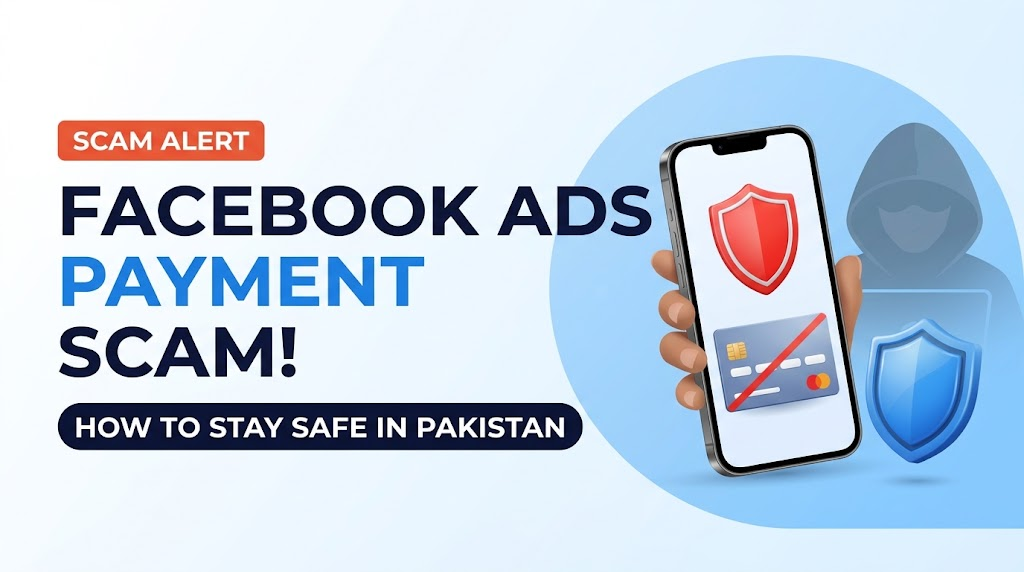
You set up your first Facebook ad, pick a budget, and then hit the one problem every Pakistani advertiser knows: how do I pay? Local debit cards often fail, and international payments get declined. That gap is exactly where scammers find their customers.
If someone has offered to “solve” your Facebook ads payment problem, read this before you send a single rupee.
Why Payment Scams Are So Common in Pakistan
Meta charges advertisers in foreign currency, and many local cards are blocked or limited for international transactions. Advertisers get frustrated and start looking for shortcuts. Scammers know this, so they advertise “easy solutions” in Facebook groups, WhatsApp communities, and Instagram DMs.
The offers sound reasonable, which is why people fall for them:
- “Pay me in PKR, I’ll run your ads in dollars.”
- “Use my verified card, no limits.”
- “Get a ready-made ad account with a spending limit removed.”
Some of these are plain theft. Others are riskier in a quieter way, because they put your business at the mercy of a stranger.
The Most Common Facebook Ads Payment Scams
1. The “Pay Me and I’ll Run Your Ads” Trick
A fake agent takes your money, promises to launch your campaign, and then goes silent. Or the ads run for a day and stop, and you never see a proper report. If you can’t see the spending inside your own ad account, you have no proof your money was actually spent on ads.
2. Stolen or Misused Cards
Some “marketers” pay for your ads using cards they don’t own. Those cards can be reported and the payments reversed. When that happens, your ad account may be flagged, restricted, or disabled, even though you did nothing wrong. This is a real risk of running ads through a stranger’s payment method.
3. Fake Ad Accounts for Sale
Sellers offer old or “high-limit” ad accounts at a discount. Buying one usually means you don’t control the account, and the original owner or the seller can recover it. Meta’s rules also don’t allow selling or transferring accounts, so you could lose the account and your money together.
4. Fake Meta Support and Phishing
You get a message saying your ad account is “about to be banned” and you must pay a fee or click a link to fix it. Meta doesn’t ask for payment through random chats or personal accounts. These links steal your login details and sometimes your card information.
5. Fake Payment Screenshots
You’re the one selling in this scenario. A buyer sends a fake screenshot of a transaction, you release the service, and the money never arrives. Always check your own bank or wallet balance, not an image.
Red Flags That Should Make You Stop
Pause immediately if you notice any of these:
- They ask for your Facebook password or Business Manager admin access
- They refuse to add you as an admin on the ad account
- They push you to pay quickly because “the offer ends today”
- They only accept payment to a personal account with no business identity
- The price is far below what the market charges
- They have no website, portfolio, or verifiable past clients
A genuine professional will be transparent, give you access, and explain exactly where your money goes.
How to Stay Safe: Practical Steps
Use your own payment method whenever possible. Many Pakistani advertisers use a bank-issued international debit or credit card, or a virtual card from a trusted provider. Check which options currently work for your bank, because availability changes.
Keep ownership of your ad account. The account and Business Manager should be created under your own profile. Any agency or freelancer should work as a partner or added admin, so you can remove them any time.
Check spending yourself. Open Ads Manager regularly. Your budget, billing history, and results should match what your agency reports.
Verify before you pay. Ask for past work, check reviews, and talk to former clients. A real digital marketing partner will have a track record you can confirm. If you’d like a team that handles ads transparently, you can see how our digital marketing services are structured.
Turn on two-factor authentication. This protects your Facebook profile and Business Manager from being hijacked, which is how many “ban threats” start.
Never share OTPs or card details in chat. No legitimate service needs your one-time password.
What to Do If You’ve Already Been Scammed
- Stop all further payments to the person.
- Secure your accounts. Change passwords, remove unknown admins, and enable two-factor authentication.
- Contact your bank right away if you shared card details, and ask them to block or replace the card.
- Save evidence: chats, receipts, account names, and phone numbers.
- Report it to Meta through the ad account’s help tools, and to the relevant cybercrime authorities in Pakistan, such as the FIA’s cybercrime wing.
Acting quickly gives you the best chance of limiting the damage.
Build a Safer Ad Strategy
Payment safety is only half the story. Even with a secure payment setup, poorly targeted ads waste money, and that feels like a scam too. Strong creative, a clear audience, and a website that converts matter just as much. Pairing paid ads with SEO services also means you rely less on ads over time, because organic traffic keeps working without a daily budget.
Final Thoughts
Facebook ads can transform a small Pakistani business, but only if your money and your account stay in safe hands. Be suspicious of shortcuts, keep control of your own account, and verify everyone you work with.
If you’re unsure about a payment offer or want help running ads the right way, get in touch with our team and we’ll walk you through it.